



#March2011
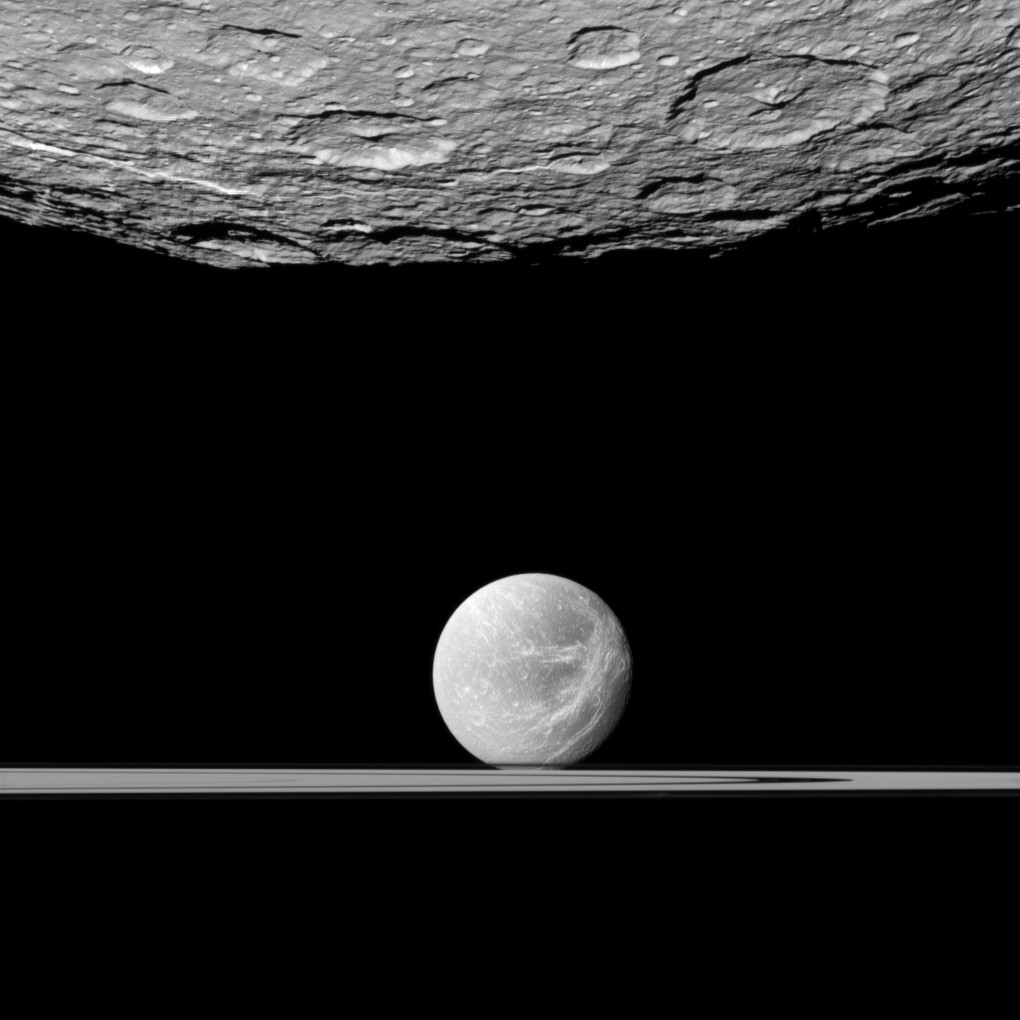
Saturn’s Moon Rhea Takes A Beautiful Picture; Dione Isn’t Shabby Either.
Enlarge. | Via.
Saturn has sixty-two moons. Jesus Christ, I’m getting envious. Captured by Cassini in this picture is two of said moons, Rhea and Dione. The image is a work of perspective porn, giving you a glimpse at Rhea’s Southern Pole, and a Dione that appears to be balancing on Saturn’s rings.
1 Comment »
Check Out Discovery’s Launch From An Airplane. Perspective ++
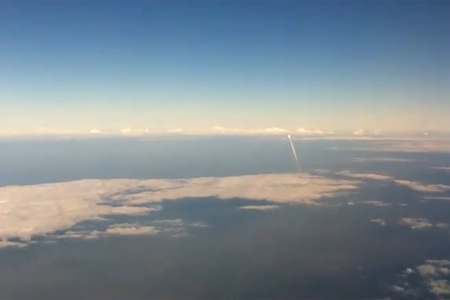
The Space Shuttle Discovery took its final journey off of this this giant blue-skinned rock on Thursday. All us dorks peeped the launch in a variety of manners, but I sure hadn’t seen it like this. NeilMonday on YouTube was in an airplane when he caught the beauty in motion. It’s a different perspective than I’m used to catching these launches at, and I’ll be goddamned it isn’t gorgeous.
Look at that scrapheap of ingenuity that us humans cobbled together. Sometimes we’re capable of some pretty impressive shit.
Hit the jump for the video.
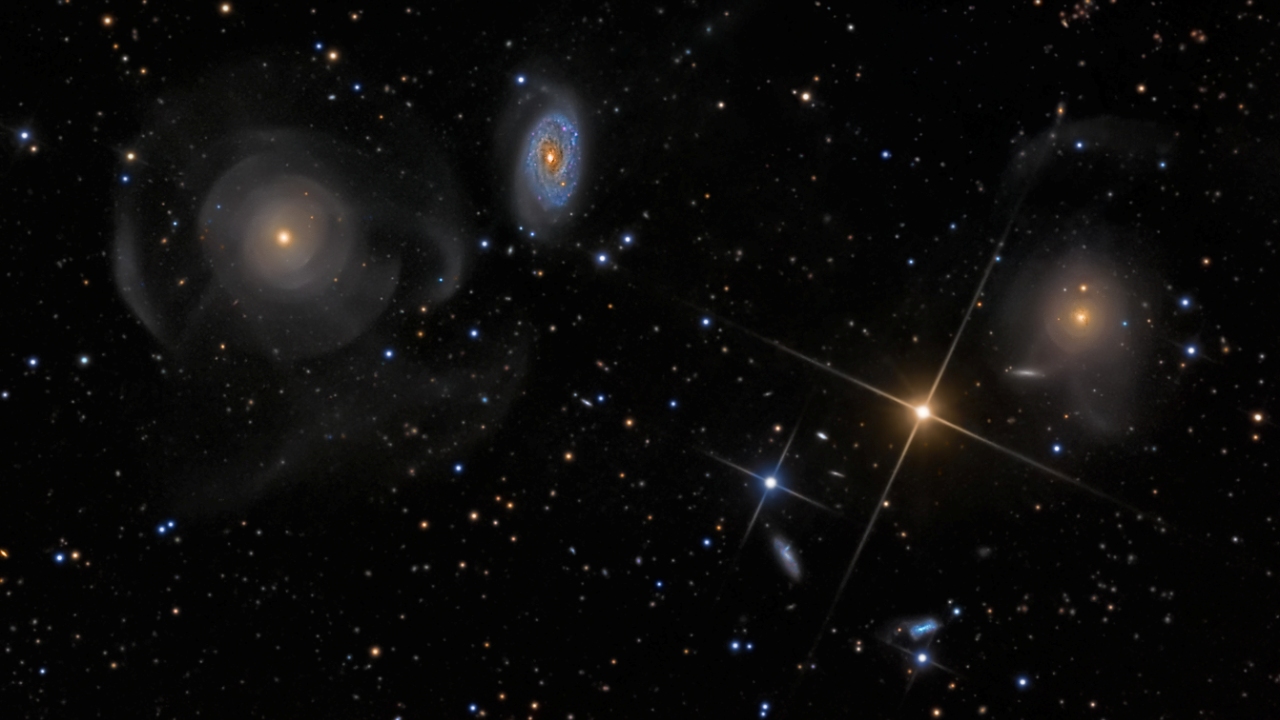
Yo, The Pisces Constellation Got Itself Some Weird Galaxies.
Enlarge. | Via.
Behind the stars that form the Pisces constellation, there’s some flamboyant galaxies. When you’re in (relatively, but of course everything is relative) close proximity to a total famous constellation, you’re going to have to do things to stand out. Right? Right!
Read the rest of this entry »
Video Of An Enormous Solar Flare Erupting On The Sun; Solar Splooge.
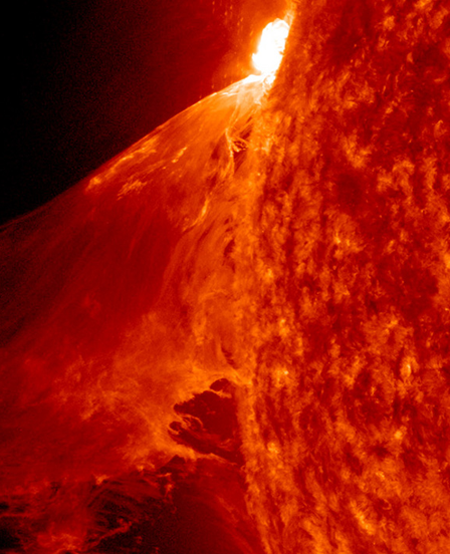
The Sun’s fucking cranky these days. We’re in an increased period of solar activity, and one benefit for geeks like me is that it’s giving us a plethora of sun ejaculation flicks to enjoy. I mean, I like ejaculation videos as-is, but now we’re taking them onto a scale the size of the solar system? I vote yes.
The latest solar flare to rock our socks off occurred on February 24.
‘Sidereal Motion’; Video That Shows The Motion Of The Stars
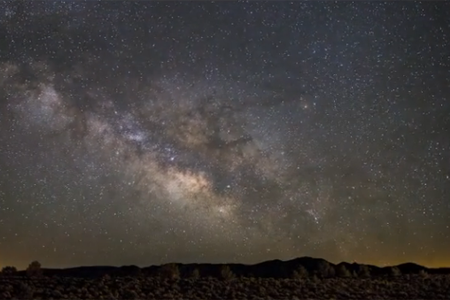
A new video by José Francisco Salgado featured over at Bad Astronomy displays the beauty of sidereal motion. That fancy term is used to describe the movement of the stars in the night sky. As Phil Plait explains, it is “the apparent rising and setting caused by the rotation of the Earth. You don’t notice it second-by-second as you watch the sky, but over minutes and hours the inevitability of our planet’s angular momentum makes itself known.”
Ah, our perceptions. I can’t help but wish I was capable of perceiving the Milky Way rise across a night sky without the aid of time-lapse. But for now, this’ll do.
Hit the jump for the video.
Video Shows Relative Size and Distance Between Moon And Earth; Cosmic Scale!

Riffing off of a video a couple of days ago which displayed the relative scale of planets in our solar system in comparison with crazy ass fucking stars and the what-not comes this video. A gentleman takes to the street to ask people how far away they think the Moon is from Earth, using the relative scale of a tennis ball and a basketball. How does the actual scale work out?
Phil Plait answers that question:
(If) the Earth is a basketball, does a tennis ball get the size of the Moon right?
The Earth is 12,740 km (7900 miles) across, and the Moon 3474 km (2150 miles) in diameter, for a ratio of 3.7.
A standard NBA basketball is 24 cm (9.4 inches) in diameter, and a tennis ball 6.7 cm (2.6 inches), for a ratio of 3.6. Pretty good! I’ll have to remember that; it’s pretty useful.
Outstanding.
Hit the jump for the video.
Gorgeous Image of Discovery Before Her Final Launch.
Enlarge. | Via.
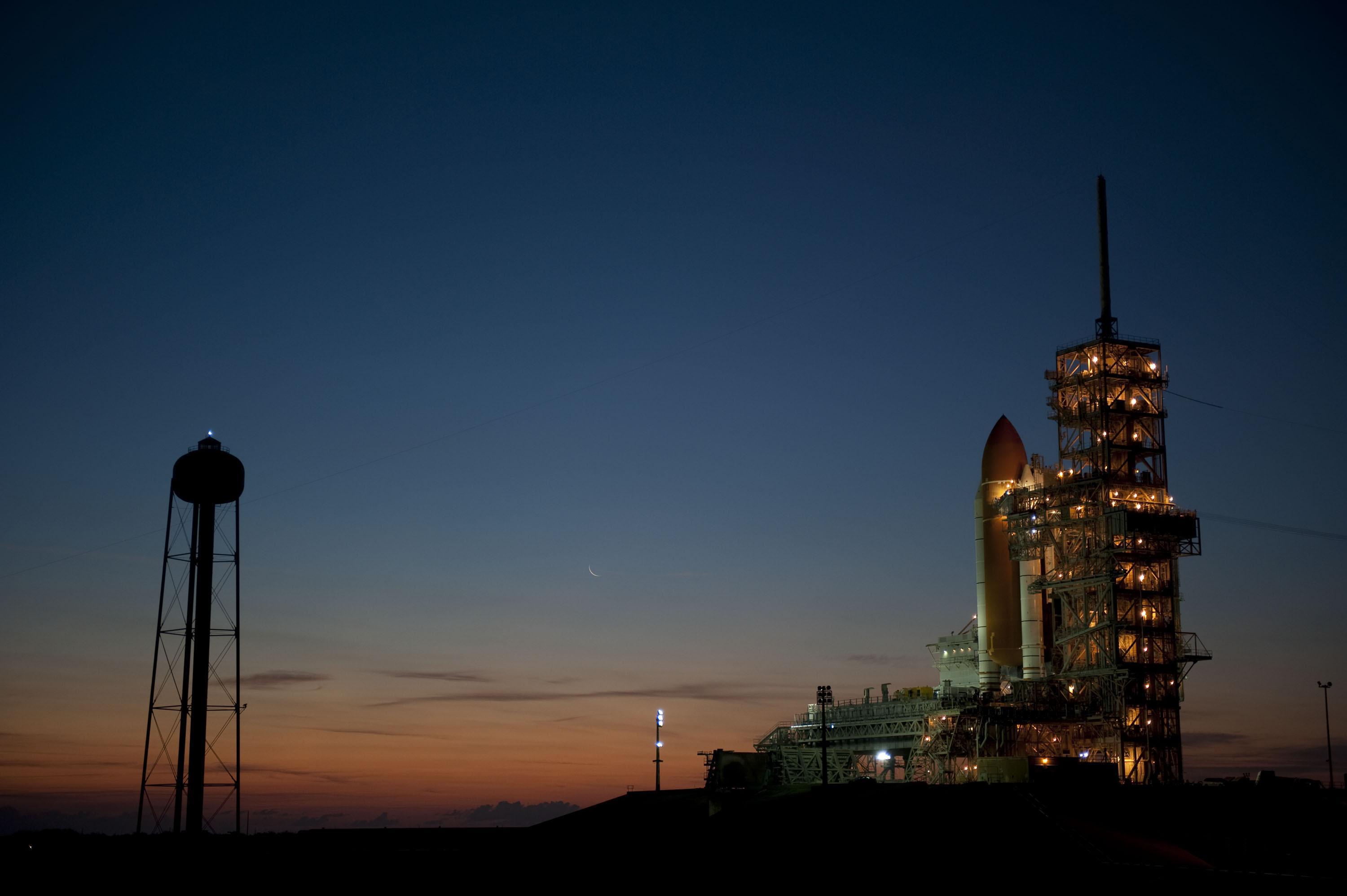
You need to click this pig to get a full sense of her majesty. This is an image of the Discovery, taken a few weeks ago. Tomorrow, Discovery is taking her final voyage into space. Sloughing off the shackles of our niggling orbit and ascending to the cosmos. Phil Plait over at Bad Astronomy notes that “barring this and one more flight of Endeavour later this year, it’ll be a while before we can put humans into space at all.”
What.
A.
Fucking.
Bummer.
We need to take to the stars, to exert our reach through the cosmos. All the time and energy wasted here, lead-footed and fighting amongst one another. Ah, to dream! Of a day when we can look forward to launches again.
Video Shows Relative Size Of Planets, Stars, Universe. We Are Nothing!
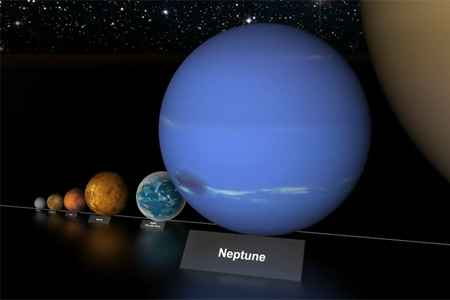
This video starts with the Moon and then scales out and out and out until it reaches the largest known star. It’s a staggering moment of cosmic awesomeness. One of those “holy shit – this place the Universe is enormous!” type things.
Hit the jump for the video. Try and not existentiapuke.
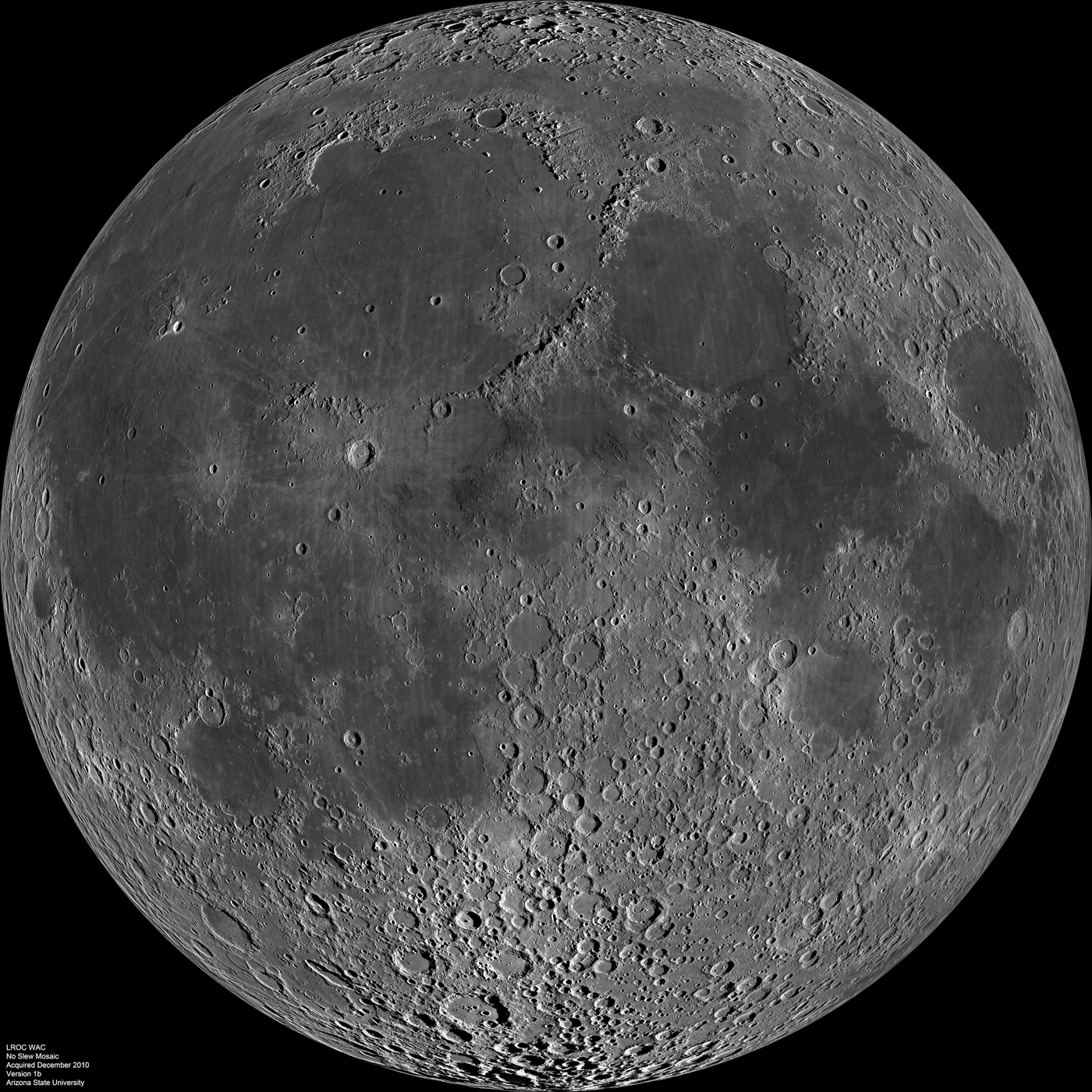
High-Res Photo Of The Moon Is Swank; Where’s The Face?!
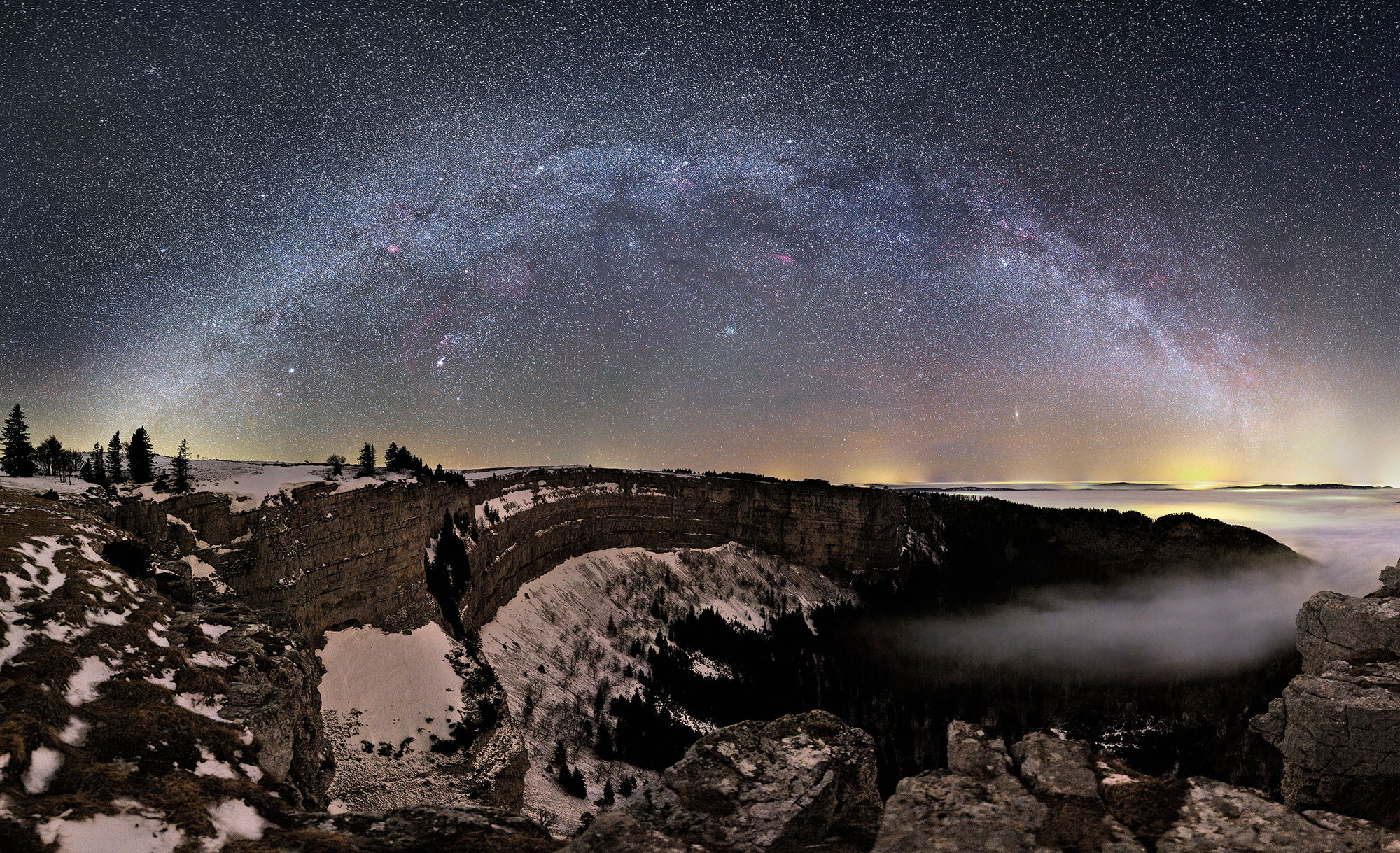
The Full Milky Way Over Switzerland Is Space Erotica.
Enlarge. | Via.
Good lord is this ever the shining paradigmatic example of space porn. That is the Milky Way galaxy and much, much more shining across the night sky in Switzerland.
What’s visible in the night sky during this time of year? To help illustrate the answer, a beautiful land, cloud, and skyscape was captured earlier this month over Neuchâtel, Switzerland. Visible in the foreground were the snow covered cliffs of the amphitheater shaped Creux du Van, as well as distant trees, and town-lit clouds. Visible in the night sky (at midnight) were galaxies including the long arch of the central band of our Milky Way Galaxy, the Andromeda galaxy (M31), and the Triangulum galaxy (M33). Star clusters visible included NGC 752, M34, M35, M41, the double cluster, and the Beehive (M44). Nebulas visible included the Orion Nebula (M42), NGC 7822, IC 1396, the Rosette Nebula, the Flaming Star Nebula, the California Nebula, the Heart and Soul Nebulas, and the Pacman Nebula.
I need to be wherever this picture can be taken. Almost too gorgeous to fathom as real.